I recommend gallbladder surgery, known clinically as a cholecystectomy, when gallstones or gallbladder inflammation are causing you pain or other symptoms, not simply because gallstones are present. If you are considering gallbladder surgery, the first thing I want you to know is that surgery is not automatically required for gallstones found without symptoms, and your gallbladder is not essential to digestion.
Most people adapt well to life without a gallbladder, since your liver continues to produce the bile your body needs.
Around 15-25% of people have gallstones, and about 70% of gallstones cause no symptoms, so not everyone needs surgery
I usually consider surgery when gallstones or gallbladder inflammation are causing symptoms, not just because a scan has found stones
My standard approach is laparoscopic keyhole surgery
Many people return to light daily activities within about one to two weeks after keyhole surgery, although recovery varies
Life without a gallbladder is generally normal, since your liver continues making bile
Understanding Gallbladder Surgery and Why It Is Performed
When I perform gallbladder surgery, I remove the gallbladder, a small organ that sits under your liver and stores bile between meals. I’ll use plain language throughout the rest of this page, since I know patients searching for information use different terms for the same operation.
Your gallbladder’s job is to store and concentrate bile, then release it once fatty food enters your digestive system. This is why your symptoms often appear or worsen after a fatty meal. When gallstones form and block this process, or when your gallbladder becomes inflamed, it can cause recurring pain rather than working quietly in the background as it should.
I perform gallbladder surgery when the gallbladder has become the source of ongoing symptoms or complications. It is a common abdominal operation, and the surgical approach has changed considerably over recent decades, moving from a single large abdominal incision to the minimally invasive, keyhole techniques I describe further down this page.
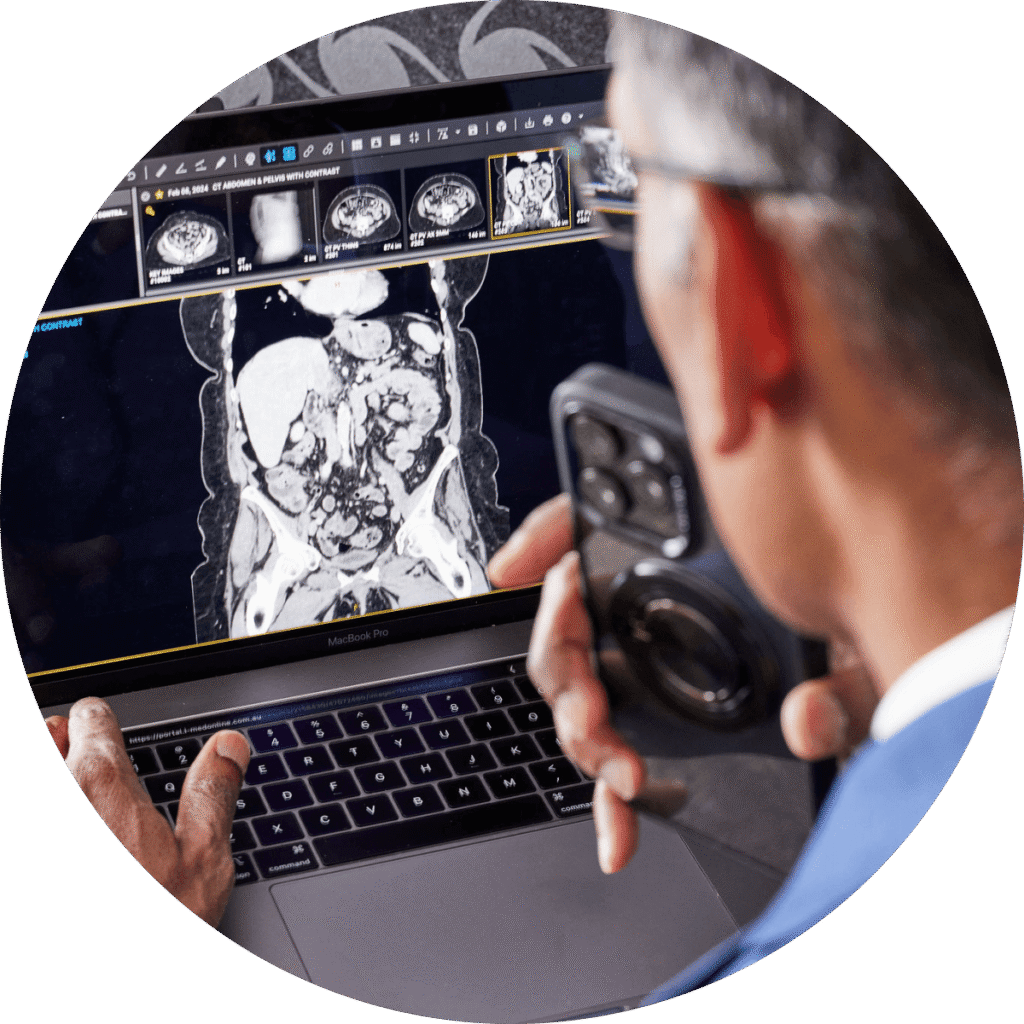
I usually start your diagnosis with an abdominal ultrasound, the standard first test for identifying gallstones or a thickened, inflamed gallbladder wall. Depending on your presentation, I may also draw on:
Blood tests, to check for signs of infection or inflammation, or to see whether a gallstone has moved into your bile duct rather than remaining in the gallbladder itself
Your clinical history, including when your pain occurs and whether it follows meals
A physical examination and, where needed, additional imaging or specialist tests
These results help me work out whether your symptoms are likely to be coming from the gallbladder and whether surgery is an appropriate next step for you.
When Gallbladder Surgery Is Considered
I typically consider this operation when your gallstones or gallbladder inflammation are causing recognisable symptoms, most often upper abdominal pain, particularly after fatty or rich meals. This pattern of pain, sometimes described clinically as biliary colic, happens because your gallbladder contracts to release stored bile when fat enters your digestive system. If a gallstone blocks this process, the contraction can cause a cramping or gripping pain that typically lasts from minutes to a few hours. Other gallbladder disease symptoms I commonly see include:
Recurring pain in your upper right or central upper abdomen, sometimes spreading to your back
Nausea or vomiting, especially after a fatty meal
Bloating or indigestion that keeps returning
Fever, tenderness or worsening pain, which can suggest gallbladder inflammation (cholecystitis)
Not everyone with gallstones needs surgery, and I won’t recommend it if you don’t. Around 15-25% of Australians have gallstones, and for most, the stones cause no symptoms at all and require no treatment. I generally recommend surgery once your gallstones are causing pain or complications, not simply because they were found incidentally on a scan for an unrelated reason.
If you experience sudden, severe upper abdominal pain, especially if it is accompanied by fever or yellowing of your skin or eyes, you should seek prompt medical assessment. These symptoms need to be assessed by a doctor or hospital emergency department without delay, rather than waiting for a routine consultation with me.
Treatment Options for Gallbladder Surgery
My standard approach to gallbladder surgery in Australia is laparoscopic keyhole surgery. Instead of one large incision, I operate through several small cuts using a camera and fine instruments. This approach is generally associated with less pain, less visible scarring and a faster return to normal activity compared with open surgery.
Open surgery, using a single larger incision, may still be the safest option in some situations. I generally consider it when keyhole surgery is not appropriate for clinical reasons.
Significant inflammation
Significant inflammation that makes keyhole surgery less safe
Scarring
Scarring from previous surgery that increases the risk of a keyhole approach
Anatomical factors
Anatomical factors that make open surgery safer for the individual patient
I make the choice between techniques on clinical grounds during your assessment, not as a matter of preference alone.
I perform keyhole gallbladder surgery under general anaesthetic. The main steps are usually as follows.
1
I make several small incisions, each generally less than a centimetre, to insert a camera and fine surgical instruments
2
I carefully separate the gallbladder from the liver bed and the surrounding structures, including the cystic duct and cystic artery
3
I remove the gallbladder through one of the incisions
Many of my patients having straightforward, planned keyhole gallbladder surgery are often managed as day surgery or with a short overnight stay. I confirm this with you during consultation because your hospital stay depends on your health, your symptoms and the complexity of the operation.
Dr Manju’s Experience in Gallbladder and Biliary Surgery
I’m Dr Manjunath Siddaiah-Subramanya, also known as Dr Manju. I hold specialist registration in General Surgery and was awarded FRACS in General Surgery by the Royal Australasian College of Surgeons in 2016. I also hold a subspecialist qualification in Upper GI and Bariatric Surgery. I practise as a Consultant Oesophago-Gastric, Bariatric and General Surgeon, with a public hospital appointment at Bankstown-Lidcombe Hospital in Sydney.
My training includes specific experience relevant to gallbladder surgery, along with my broader upper GI and general surgery work. This includes:
Three years of sub-specialty training in oesophago-gastric and metabolic surgery, including a senior fellowship at Queen Elizabeth Hospital, Birmingham, a high-volume resection centre with a particular interest in cancer and hiatal surgery
An AANZGOSA fellowship at Sir Charles Gairdner Hospital and Austin Hospital, where my training included performing laparoscopic bile duct explorations, a technique used when gallstones have moved into the bile duct itself rather than remaining in the gallbladder. This is a specific, biliary-focused part of my surgical training, in addition to my standard keyhole gallbladder surgery experience
GESA accreditation as an endoscopist for gastroscopy and colonoscopy
I know that understanding your surgeon’s training and experience, including any specific biliary or bile duct exposure, is part of feeling informed and confident before agreeing to surgery. My goal is to help you understand what is causing your symptoms and what treatment option is most appropriate for your situation.
Understanding Your Recovery After Gallbladder Surgery
Recovery Timeline
Your recovery from gallbladder surgery depends on the surgical approach I use and on your individual factors. As a general, sourced guide, laparoscopic keyhole surgery is designed to allow most patients to return to normal activities within about one to two weeks, while recovery from open surgery typically takes longer, around several weeks. For many of my patients, day-to-day comfort improves steadily over this period, although your individual recovery will vary based on your overall health, the complexity of your surgery, and how closely you follow my post-operative guidance.
In the first few days after surgery, mild discomfort around the incision sites is common and usually improves with the pain relief plan I recommend. I usually encourage gentle movement, such as short walks, early in recovery. Heavier lifting and strenuous activity are generally avoided for a period of weeks while your incisions heal.
I provide individual instructions on wound care, activity, diet, driving, pain relief and follow-up review before you leave hospital.
Aspect
Laparoscopic (keyhole)
Open surgery
Typical incisions
Several small incisions
One larger incision
Return to normal activity
About one to two weeks
Several weeks
When it is used
Standard first approach for most suitable patients
Used where keyhole surgery is not safe or suitable
Dietary Adaptation and Living Well Without a Gallbladder
A concern I often hear before surgery is whether your life afterwards will involve permanent dietary restriction. For most of my patients, it does not. Your gallbladder is not vital to digestion, and your body continues to function normally without it, because your liver continues to produce the bile you need, which then drains directly into your small intestine rather than being stored first.
You may notice temporary changes in your digestion after surgery, most commonly looser stools, because your bile now drains more continuously into your intestine rather than being released in a concentrated burst with meals. If this happens to you, it usually settles within a few weeks to a few months as your digestive system adjusts.
I generally recommend a gradual return to a normal diet, with temporary caution around very fatty, greasy or rich meals in the early recovery period. Your advice may be different if you have other digestive conditions, so I tailor this guidance to you.
Post-Cholecystectomy Syndrome
A small proportion of patients continue to experience digestive symptoms after gallbladder removal. These may include bloating, diarrhoea, nausea or abdominal pain. This is sometimes called post-cholecystectomy syndrome.
If your symptoms continue after surgery, I will review the possible cause and may recommend dietary changes, blood tests, imaging or further treatment where needed.
Success Stories
Real Patients, Real Results
Frequently Asked Questions about Gallbladder Surgery
Is the gallbladder an essential organ for digestion?
No. Your gallbladder stores bile but is not essential to digestion. After I remove it, your liver continues to produce bile, which drains directly into your small intestine. Most of my patients adapt well to life without a gallbladder.
Do I need surgery if I have gallstones?
Not necessarily. Around 15-25% of Australians have gallstones, and most have no symptoms and need no treatment. I generally recommend surgery once your gallstones are causing pain or other symptoms, not simply because they’re present on a scan.
What does the gallbladder actually do?
The gallbladder stores and concentrates bile between meals, then releases it to help digest fatty food. It does not produce bile. The liver produces bile, and the gallbladder stores it until it is needed.
What is the difference between laparoscopic and open gallbladder surgery?
Laparoscopic keyhole surgery uses several small incisions and a camera to remove the gallbladder. It is my standard first approach for most suitable patients. Open surgery uses one larger incision and is usually reserved for cases where keyhole surgery is not safe or suitable.
How long is the recovery after gallbladder surgery?
For most people, recovery from laparoscopic surgery takes about one to two weeks before a return to normal activities, while open surgery generally takes longer, around several weeks. I give you personalised guidance based on your operation, your overall health and the type of work or activity you need to return to.
Will I need to change my diet permanently after gallbladder removal?
For most of my patients, no permanent dietary restriction is needed. You may notice temporary looser stools in the weeks after surgery as your digestive system adjusts, which usually settles within a few weeks to a few months.
Will I have visible scars after keyhole gallbladder surgery?
Keyhole surgery usually leaves a small number of small incision scars. These often fade over time, although healing varies from person to person.
Do I need a referral to see an upper GI surgeon for gallbladder surgery?
Yes. As with other specialist surgical consultations in Australia, you’ll generally need a referral from your GP to see me and for Medicare rebate eligibility on the consultation.
Ready to Discuss Your Gallbladder Surgery Options
If you’re experiencing gallbladder symptoms and want to understand whether surgery may be right for you, the next step is a consultation with me. I consult across Sydney at Bankstown, Strathfield, Oran Park and Norwest.